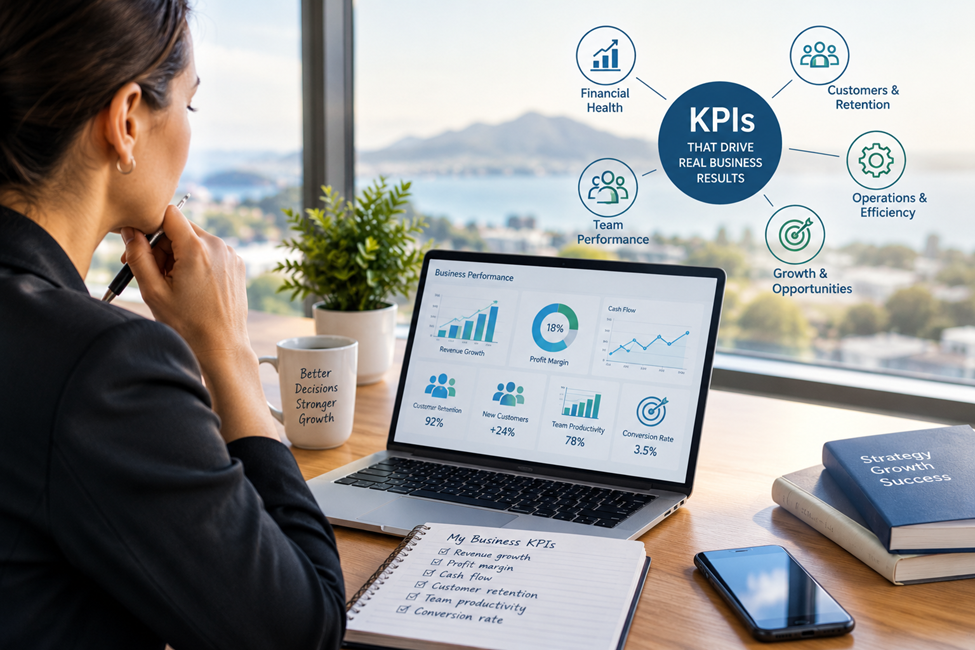
Running a business involves making decisions about finances, customers, employees and future growth. However, without clear performance measures, it can be difficult to understand whether the business is moving in the right direction. For every business owner, tracking the right Key Performance Indicators (KPIs) provides a clearer picture of what is working, where improvements are needed and which areas require attention. At Think Differently Group, practical business coaching and strategic guidance help business owners assess their priorities and make more informed decisions about business performance.
Not every metric deserves equal attention. The most useful business KPIs are those that connect directly to your goals and help you make informed decisions. By monitoring a manageable set of relevant measures, New Zealand business owners can better understand performance and plan their next steps with confidence.
What Are KPIs and Why Do They Matter?
Key Performance Indicators are measurable values used to assess how effectively a business is achieving its objectives. They help turn general business goals into information that can be reviewed and acted upon.
For example, a business aiming to improve profitability should look beyond total sales. It also needs to understand operating expenses, profit margins and cash flow.
Tracking KPIs helps business owners:
- Monitor progress towards business goals.
- Identify financial and operational problems early.
- Understand customer behaviour and satisfaction.
- Evaluate team performance and productivity.
- Make decisions based on measurable information.
- Recognise opportunities for improvement and growth.
The important point is to select metrics that reflect the actual priorities of your business rather than tracking numbers simply because they are available.
7 Important KPIs Every NZ Business Owner Should Track
The right KPIs will depend on your industry, business size and objectives. However, the following measures provide a useful starting point for many small and medium-sized businesses.
KPI | What it measures | Why it matters |
Revenue growth | Changes in business income over time | Shows whether sales are increasing or declining |
Net profit margin | Profit remaining after expenses | Helps assess overall profitability |
Cash flow | Money moving into and out of the business | Supports financial planning and daily operations |
Customer retention | Ability to retain existing customers | Indicates customer loyalty and relationship strength |
Customer acquisition | New customers gained over a period | Helps assess sales and marketing performance |
Team productivity | Output compared with time or resources used | Highlights operational efficiency |
Sales conversion rate | Percentage of leads becoming customers | Shows how effectively sales opportunities are converted |
1. Revenue Growth
Revenue growth measures how business income changes over a specific period. Comparing monthly, quarterly or annual revenue helps identify trends and understand whether sales activities are producing results.
However, increasing revenue does not automatically mean a business is becoming more profitable. Higher sales may also bring increased operating costs, staffing requirements and other expenses.
2. Net Profit Margin
Net profit margin shows how much of the business’s revenue remains as profit after expenses have been deducted. It helps business owners understand whether the business is generating sustainable returns.
Reviewing this KPI regularly can highlight rising costs, reduced margins or areas where expenses need closer attention.
3. Cash Flow
Cash flow tracks the money entering and leaving a business. A business can record strong sales and still experience financial pressure if customer payments are delayed or expenses are poorly managed.
Monitoring cash flow helps owners plan upcoming commitments, manage payments and identify potential financial difficulties before they become more serious.
4. Customer Retention
Customer retention measures how effectively a business maintains relationships with existing customers. Repeat business can provide a more consistent foundation for future revenue.
Tracking customer retention helps identify changes in customer loyalty and whether improvements to service delivery or communication may be needed.
5. Customer Acquisition
Customer acquisition measures how many new customers a business attracts over a particular period. Reviewing this alongside marketing and sales activity helps determine whether efforts to reach potential customers are producing results.
It is also useful to compare new customer numbers with customer retention to understand the overall health of customer relationships.
6. Team Productivity
For businesses with employees, team productivity is an important measure of operational performance. It can help owners understand how effectively people, time and resources are being used.
Consider reviewing completed work, project progress, delivery times and team objectives. These measures should provide useful insight without focusing only on activity or hours worked.
7. Sales Conversion Rate
The sales conversion rate measures the proportion of enquiries or leads that become paying customers. If enquiries are increasing but sales remain unchanged, it may indicate issues with follow-up, communication or the sales process.
Reviewing this KPI can help identify where improvements are needed to turn more opportunities into business.
How to Choose the Right KPIs for Your Business
Tracking too many metrics can make performance reviews confusing and time-consuming. Instead, choose KPIs that support your current business priorities.
Start by:
- Defining your goals: Identify what you want to improve, such as profitability, customer retention or operational efficiency.
- Selecting relevant measures: Choose KPIs that directly show progress towards those goals.
- Setting realistic targets: Establish measurable objectives based on your current business performance.
- Reviewing results consistently: Monitor performance weekly, monthly or quarterly, depending on the metric.
- Taking action: Use the results to identify improvements and adjust your business plans.
A structured approach to business coaching and support can also help owners assess their priorities, understand performance challenges and turn business goals into practical actions.
Turn Business Metrics into Better Decisions
KPIs are valuable only when the information is used to guide decisions. Reviewing numbers without understanding what is influencing them will not necessarily improve business performance.
For example, declining profitability may be connected to increasing expenses, reduced sales margins or operational inefficiencies. Understanding the reason behind the result is essential before deciding what needs to change.
Regular performance reviews can also support better conversations with managers and employees. They help everyone understand priorities, recognise progress and identify areas requiring attention.
For business owners looking to strengthen their management approach, practical management training can help develop skills in prioritisation, delegation and managing day-to-day responsibilities. Similarly, leadership development can support leaders in connecting team performance with wider business objectives.
Conclusion
The right KPIs help a business owner understand performance beyond sales figures and day-to-day activity. Monitoring revenue, profitability, cash flow, customer relationships, team productivity and sales conversion provides a more balanced view of business health.
The key is to focus on measures that support your business goals, review them consistently and use the findings to make informed decisions. If you want to improve how you assess business performance and plan for growth, Contact us at Think Differently Group to discuss practical business coaching and support for your next steps.
Frequently Asked Questions
Important KPIs include revenue growth, net profit margin, cash flow, customer retention, customer acquisition, team productivity and sales conversion rate. The right selection depends on the business’s goals and priorities.
Some KPIs, such as cash flow and sales activity, may need weekly monitoring. Other measures, including profitability and customer retention, can be reviewed monthly or quarterly.
KPIs highlight performance trends, identify areas requiring attention and help owners measure progress towards business goals. They support more informed decisions and practical improvements.
No. Different businesses have different priorities, operating models and customer requirements. KPIs should reflect the specific objectives and performance areas that matter to each business.
A business coach can help owners clarify business objectives, identify useful performance measures and review results as part of a wider business strategy. This can help turn performance information into practical actions.